

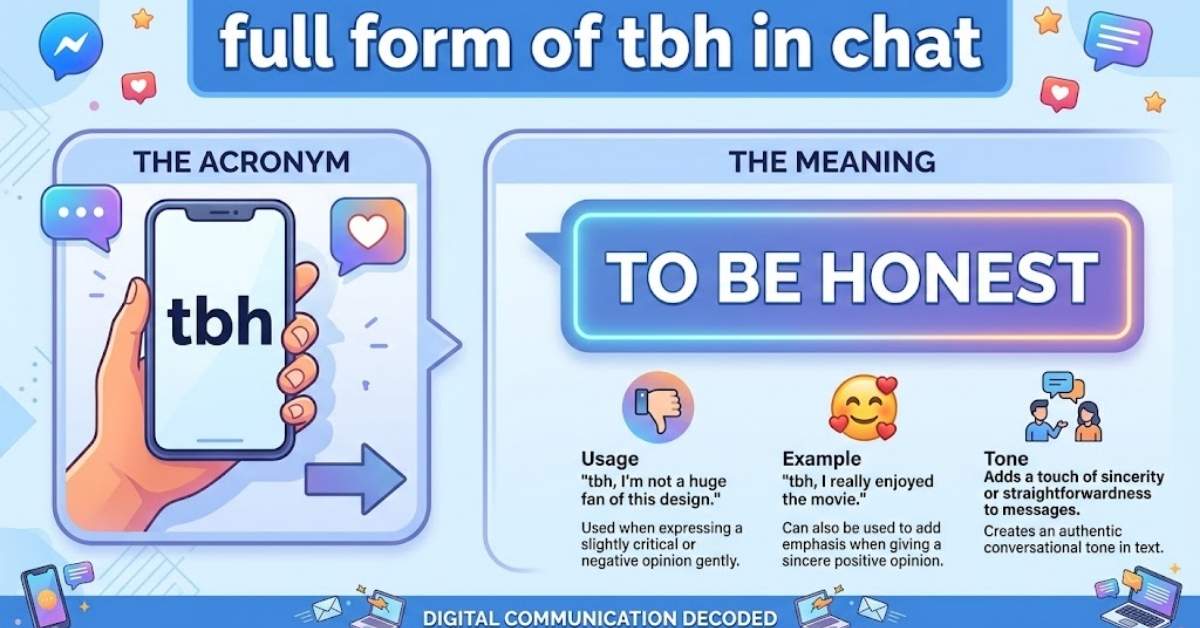
Your friend texts, “tbh, I loved it.” Now you’re staring at the screen. Is that real praise, or the setup for bad news?
TBH stands for “to be honest.” People type it before an honest opinion, a personal feeling, or a truthful reply.
This guide covers TBH meaning in text, 17+ alternative ways to say TBH, real texting examples, and the moments when you should skip it.
What Does TBH Mean in Text?
TBH meaning in text is simple: “to be honest.” It’s one of the most common texting acronyms you’ll see in text messages, DMs, and comment sections.
Think of it as a small signal flare. It tells the reader, “I’m about to share what I really think.”
You’ll see it in casual conversation, social media slang, and informal discussions. It rarely shows up in formal writing, though.
TBH Meaning in Text with Examples:
Here’s how it looks in the wild. “tbh, I forgot about dinner tonight.” That’s a candid admission, and it’s honest without being harsh.
Another one: “I liked the movie, tbh.” Here the word softens the opinion and keeps the mood light.
And a third: “tbh, I’m kind of nervous.” That one shows vulnerability in conversation, and it often invites a kind reply.
Placement changes the feel. At the start, TBH sounds like a warning. At the end, it sounds like a quiet confession.
17+ Alternative Ways to Say TBH in Text
TBH is handy, but it gets repetitive. These TBH alternatives keep your online communication fresh. Each one fits a slightly different mood, so pick based on your audience.
If I’m being honest
This one feels gentle and thoughtful. It works well when you’re about to say something a bit personal.
Example: “If I’m being honest, I’d rather stay in tonight.”
To be frank
It’s a touch more direct than TBH. It signals straightforward communication without sounding cold.
Example: “To be frank, the plan needs more time.”
Honestly speaking
This one sounds calm and spoken, almost like a pause in a chat. It’s great for expressing opinions without drama.
Example: “Honestly speaking, I think we’re ready.”
Just being real
It’s relaxed and a little street smart. Friends use it when they want to keep things genuine and low pressure.
Example: “Just being real, that outfit isn’t your best.”
To tell you the truth
This phrase has a warm, old school feel. It works when you’re easing into honest feedback.
Example: “To tell you the truth, I never liked that song.”
If I had to be honest
It sounds a bit reluctant, like you’re being nudged to answer. That makes it a good fit for softening criticism.
Example: “If I had to be honest, I’d pick the first option.”
Just my honest opinion (JMO)
JMO is the short form of “just my opinion,” and it signals humility. You’re sharing personal opinions, not issuing orders.
Example: “JMO, but the second draft reads better.”
Not gonna lie (NGL)
NGL is the closest cousin of TBH in internet slang. It often precedes a surprising or slightly embarrassing truth.
Example: “NGL, I cried at the ending.”
To be truthful
It sounds a little more formal, so it suits workplace emails and professional communication. You can use it when accuracy matters.
Example: “To be truthful, we missed the deadline.”
From my perspective
This one reminds the reader that it’s your view, not a universal fact. It’s a smart tool for respectful communication.
Example: “From my perspective, the budget looks tight.”
I’ll be straight with you
It sets a serious tone. Use it when the news is important and you don’t want to dodge.
Example: “I’ll be straight with you, this isn’t working.”
Just speaking my mind
It feels casual and open. People use it when they want to start an open discussion without sounding bossy.
Example: “Just speaking my mind, but let’s try a new route.”
If I had to give my honest take
This one adds a bit of weight. It’s perfect for reviews, movie opinions, and any honest take someone asked for.
Example: “If I had to give my honest take, the sequel wins.”
I won’t sugarcoat it
You’re warning the reader that the truth might sting. Use it sparingly, and only when kindness stays in the message.
Example: “I won’t sugarcoat it, the draft needs a rewrite.”
To be 100% honest with you
It adds emphasis. It works for building trust during a serious discussion, but it can sound dramatic if you overuse it.
Example: “To be 100% honest with you, I’m still unsure.”
In all honesty
It’s smooth, polite, and a little formal. It fits well in business communication and longer messages.
Example: “In all honesty, we need a better plan.”
To put it bluntly
This is direct communication at its sharpest. Save it for moments when the other person asked for no filter.
Example: “To put it bluntly, the price is too high.”
Keeping it real
It’s warm, friendly, and very social. You’ll hear it in genuine conversations among friends.
Example: “Keeping it real, I miss our old routine.”
Texting Examples Using TBH and Alternatives
Theory is fine, but examples stick better. Here are casual chat examples and work feedback samples you can borrow. Swap in whichever phrase fits your tone.
Casual Chat:
You: “Want to try that new ramen place?”
Friend: “tbh, I’m craving pizza.”
That’s a harmless personal preference, and it keeps the plan flexible.
Social Media Post:
Caption idea: “Not gonna lie, this trip changed how I see work.”
On social media posts, honest lines grab attention. They feel human, and people tend to engage with them.
Honest Compliment:
“Honestly speaking, your presentation was the best part of the day.”
Honest compliments land better than generic praise. They show you paid attention.
Work Feedback:
“To be truthful, the intro runs long. A shorter opening would hit harder.”
That’s giving honest feedback with a clear fix attached. It’s helpful, not harsh.
Softening Criticism:
“If I’m being honest, the colors feel heavy. Maybe we can lighten them?”
Here the question at the end keeps the door open. That’s constructive criticism done right.
Discussing Plans:
“tbh, Friday works better for me. Saturday is packed.”
This is team coordination in miniature. You give a reason, and the other person can adjust fast.
Serious Talk:
“I’ll be straight with you. I’ve been feeling stretched thin.”
Serious moments call for a steady tone. A short, plain sentence often says it best.
Making a Suggestion:
“Just speaking my mind, but a shorter meeting might help.”
This kind of respectful suggestion invites a reply instead of a defense.
Sharing an Opinion:
“From my perspective, the first plan carries less risk.”
You’re sharing thoughts openly without claiming to hold the final word.
Expressing Disagreement:
“In all honesty, I see it differently. Can I explain why?”
You can disagree and still be kind. That’s how you keep sharing differing views from turning into a fight.
Telling the Truth:
“To tell you the truth, I forgot to send the file. I’ll do it now.”
Owning a slip builds accountability. People usually forgive honesty faster than excuses.
Why Do People Use TBH in Texts?
Typing is flat. A short phrase like TBH adds emotional connection that your voice would normally carry.
It also cushions a statement. “tbh, that’s not my favorite” feels softer than “that’s not my favorite.”
Speed matters too. Three letters beat three words when you’re thumbing through a busy chat.
Where Did TBH Come From?
TBH grew out of early online communication, when chat rooms and short texts pushed people to shorten everything. It sat comfortably next to LOL and BRB.
Later, social platforms gave it a second life. On Instagram, “like for a TBH” became a playful trend where friends traded honest comments.
Today it’s a standard text abbreviation. Most people understand it without a second thought.
When to Use TBH (and When to Skip It)
Use TBH with friends, family, and teammates you know well. It fits informal language and quick chats.
Skip it in formal language, client emails, and anything legal. In those spaces, “to be honest” or “in all honesty” reads cleaner.
Also skip it when you’re about to say something cruel. Adding TBH doesn’t make a harsh remark kind.
TBH vs NGL vs IMO vs IIRC
These common abbreviations look similar, but they don’t mean the same thing. Mixing them up can confuse your reader.
- TBH: to be honest, used before a candid statement.
- NGL: not gonna lie, often before a surprising confession.
- IMO: in my opinion, which marks a view as personal.
- IIRC: if I recall correctly, which flags uncertain memory. Our IIRC meaning guide covers it in detail.
A quick rule helps. Use TBH for honesty, IMO for opinion, and IIRC for memory.
How to Reply When Someone Says TBH
First, read the mood. A TBH followed by praise needs a thank you, while a TBH followed by bad news needs patience.
Try short replies like “Thanks for being straight with me” or “I appreciate that.” They keep respectful communication alive.
If the message stung, ask a follow up. “Can you tell me more?” turns a rough moment into a useful honest conversation.
Using TBH at Work
At work, honest feedback in the workplace matters, but tone matters more. A casual TBH in a team chat is fine, while an email to a client needs more polish.
Try “To be truthful” or “In all honesty” in workplace emails. They keep your professional honesty intact without sounding slangy.
Pair every critique with a next step. “The report runs long. Could we trim section two?” beats a bare complaint.
Common Mistakes People Make with TBH
The first mistake is overuse. If every sentence starts with TBH, the word loses its punch.
The second is using it as a shield. Saying something rude and tacking on TBH doesn’t excuse it.
The third is ignoring context. A joke in a group chat can feel cold in a serious one-on-one talk.
Tips for Honest Texting Without Hurting Feelings
Lead with kindness, then add the truth. “I love that you tried this. tbh, the ending felt rushed” works well.
Stay specific. “The ending felt rushed” helps more than “it wasn’t great.”
Finally, read your message once before sending. If it sounds harsh out loud, soften it.
TBH Usage in 2026
TBH remains alive and well in modern texting language. It still shows up in everyday messaging, short videos, and digital communication across most apps.
What’s changed is the mix. People now pair it with newer phrases like NGL and “keeping it real” to sound more natural.
Expect it to stick around. As long as people value authenticity, sincerity, and transparency, some version of “to be honest” will survive.
Conclusion
TBH is a tiny phrase with a big job. It signals honesty and openness, softens opinions, and makes casual honesty feel natural.You now have 17+ alternative ways to say TBH, plus texting examples for chat, work, and serious talks.
Pick the one that matches your mood and your reader.So here’s a question for you. Which phrase do you reach for most, TBH or NGL? Drop your answer in the comments, and share this guide with a friend who overuses “to be honest.”
FAQs
What does TBH mean in texting?
It means “to be honest.” You use it before sharing your real thoughts.
Is TBH rude?
Not by itself. The message that follows decides whether it’s kind or harsh.
Can I use TBH at work?
Yes in casual team chats, but use a fuller phrase in formal emails.
Is TBH the same as NGL?
They’re close. NGL usually signals a surprising or embarrassing truth.
