

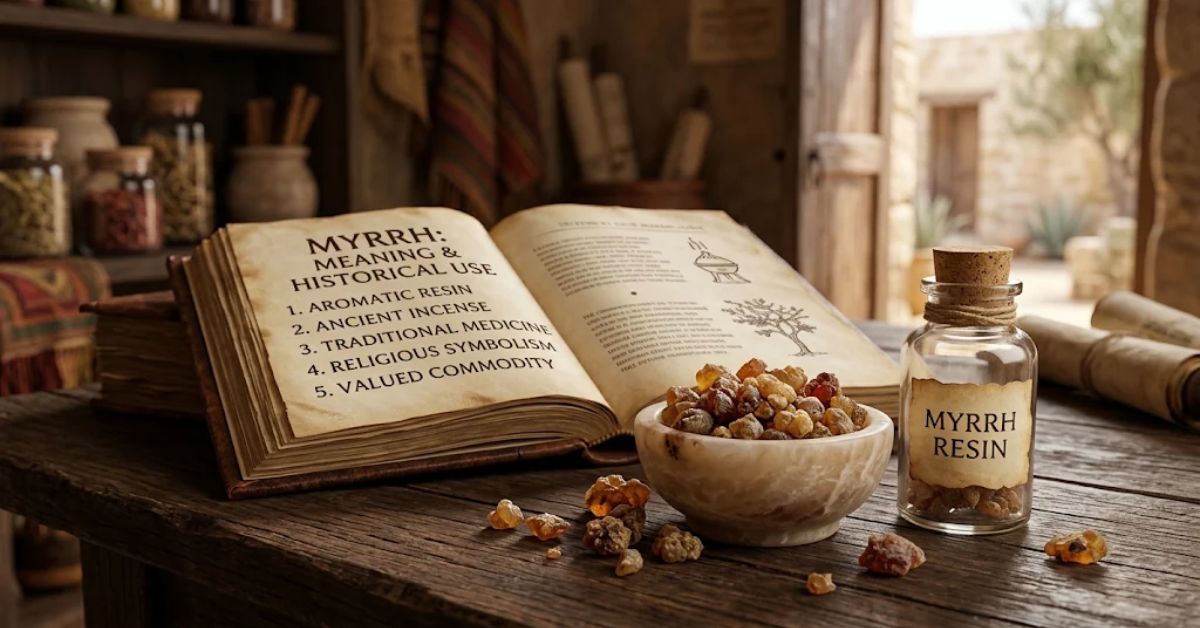
Imagine a fragrance so precious that ancient kings, priests, and traders valued it for centuries. That’s myrrh, a natural resin with a rich, earthy scent and a fascinating past. People used it in perfumes, incense, traditional remedies, and sacred ceremonies. It also played a special role in ancient burial practices. But myrrh is more than an aromatic substance. Its history carries stories of faith, beauty, healing, and devotion.
The myrrh meaning becomes even more interesting when you look at the Bible. The Magi presented it to baby Jesus alongside gold and frankincense. Christian tradition often links this gift with suffering, sacrifice, and mortality. From ancient religious rituals to modern fragrance products, myrrh holds a special place in different cultures. Let’s look at its history, biblical significance, uses, and deeper symbolism.
What Is Myrrh?
Myrrh is a fragrant natural resin that comes from certain trees and shrubs in the Commiphora genus. These plants grow mainly in parts of Africa and the Arabian Peninsula. They produce a sticky gum-resin that hardens after exposure to air.
People have valued myrrh for thousands of years. Ancient cultures used it in religious ceremonies, perfumes, incense, traditional medicine, and burial preparations. Its rich fragrance also made it a valuable trade commodity.
Today, myrrh appears in several forms, including resin, essential oil, and extracts.
Common uses include:
- Making incense and aromatic preparations.
- Adding fragrance to perfumes and cosmetics.
- Supporting traditional remedies and aromatherapy.
- Taking part in sacred rituals and anointing practices.
Understanding these uses helps explain the historical and spiritual myrrh meaning.
What Does Myrrh Look Like?
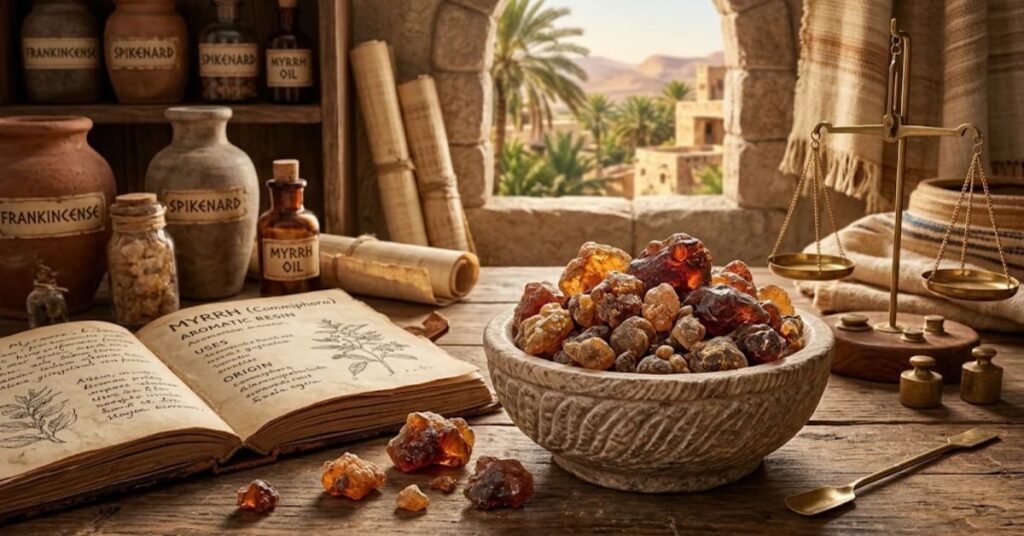
Raw myrrh usually looks like small, irregular pieces of hardened resin. Its appearance depends on the plant species, quality, and harvesting method. You may find pieces in brown, reddish-brown, amber, or dark shades.
Some pieces look translucent, while others appear cloudy or opaque. Their surfaces can also look rough, uneven, and slightly glossy. Unlike ordinary tree bark, myrrh forms when the plant releases resin through damaged areas.
Here are some common features:
- Color: Brown, reddish-brown, amber, or dark brown.
- Shape: Small lumps, crystals, or irregular pieces.
- Texture: Hard, brittle, and sometimes sticky when fresh.
- Appearance: Rough surfaces with occasional translucent edges.
When heated, myrrh releases aromatic smoke. This makes it useful for incense and traditional ceremonial practices.
What Does Myrrh Smell Like?
Myrrh has a deep, earthy fragrance that feels warm and slightly mysterious. Its aroma combines woody, balsamic, smoky, and bitter-sweet notes. Some people also describe it as medicinal or slightly spicy.
Unlike light floral perfumes, myrrh has a rich and lasting scent. Its fragrance comes from natural aromatic compounds found in the resin. The exact aroma can vary depending on the species and preparation.
People commonly describe myrrh’s scent as:
- Warm and earthy.
- Woody and resinous.
- Smoky and slightly sweet.
- Bitter with a balsamic touch.
- Deep and somewhat medicinal.
When burned as incense, myrrh creates a distinctive aromatic smoke. Perfumers also use myrrh oil in fragrance blends. Its rich scent explains why ancient cultures valued it for worship, personal fragrance, and perfumery.
Myrrh Meaning in Simple Words
In simple words, myrrh meaning refers to a fragrant natural resin collected from certain Commiphora trees. People have used this precious substance for fragrance, religious rituals, traditional remedies, and burial practices throughout history.
However, myrrh carries more than a physical meaning. In religious and cultural settings, it can represent devotion, sacrifice, healing, and mortality. Its connection with the Bible gives it special importance in Christian tradition.
Here are some common meanings associated with myrrh:
- Fragrance: Its pleasant and earthy aroma makes it valuable.
- Worship: Ancient communities used it during sacred ceremonies.
- Healing: Traditional medicine included myrrh in various preparations.
- Sacrifice: Christian interpretations connect it with Jesus’ suffering.
- Burial: Its historical use connects it with death and mourning.
- Devotion: Its presence in religious rituals suggests reverence.
For example, if someone mentions myrrh during Christmas, they may refer to one of the gifts presented to baby Jesus.
Biblical Meaning of Myrrh
The biblical meaning of myrrh carries several layers of religious and historical significance. Scripture mentions this aromatic resin in different settings, including sacred anointing oil, love poetry, perfume, and burial preparations.
In Christian tradition, myrrh is especially associated with Jesus because the Magi brought it as one of their gifts. Later theological interpretations connected this gift with his suffering, death, and sacrifice.
Myrrh also appears in both the Old Testament and New Testament. Its meaning changes depending on the passage.
Important biblical associations include:
- Anointing: Myrrh appeared in sacred oil preparations.
- Beauty and love: Song of Solomon uses myrrh in romantic imagery.
- Worship: Its fragrance connected it with religious practices.
- Suffering: Christian tradition links it with Jesus’ sacrifice.
- Burial: John 19 mentions myrrh during Jesus’ burial preparations.
These references show why myrrh holds an important place in biblical symbolism. However, readers should distinguish Scripture’s actual descriptions from later Christian interpretations.
Myrrh in the Old Testament
The Old Testament mentions myrrh in several passages involving fragrance, beauty, worship, and sacred practices. Ancient communities valued this aromatic resin because of its distinctive scent and practical uses.
One important reference appears in Exodus 30. God instructs Moses to prepare sacred anointing oil using myrrh alongside other fragrant ingredients. This oil played an important role in consecrating the tabernacle and its sacred objects.
Myrrh also appears in other biblical writings:
- Exodus 30: Myrrh forms part of the sacred anointing oil.
- Psalm 45: The passage mentions myrrh among fragrant substances.
- Song of Solomon: Myrrh appears in descriptions of love, beauty, and fragrance.
These references connect myrrh with preciousness, devotion, and reverence. Its presence in sacred preparations also explains its importance in ancient religious ceremonies.
Myrrh in the New Testament
In the New Testament, myrrh becomes closely connected with the life and death of Jesus. The most familiar reference appears in Matthew 2:11. Here, the Magi bring three gifts to the child Jesus: gold, frankincense, and myrrh.
Myrrh also appears in passages describing events surrounding Jesus’ crucifixion and burial.
Consider these important references:
- Matthew 2: The Magi present myrrh as one of their gifts.
- Mark 15: Myrrh appears in the wine offered to Jesus before crucifixion.
- John 19: Nicodemus brings a mixture of myrrh and aloes for Jesus’ burial.
Christian tradition often connects these references with suffering, sacrifice, and mortality. The gift presented at Jesus’ birth therefore carries a deeper theological meaning for many believers.
However, the Gospel writers don’t explicitly explain every symbolic connection. These interpretations developed through Christian reflection on Scripture.
Why Was Myrrh Given to Jesus?
The Magi gave Jesus myrrh as one of three precious gifts described in Matthew 2:11. Alongside gold and frankincense, it showed the importance and value they placed on the newborn child.
The Bible records the gift but doesn’t directly explain its symbolic purpose. Christian tradition later connected myrrh with Jesus’ future suffering, death, and burial because people historically used it in burial preparations.
Each gift eventually gained a traditional interpretation:
- Gold: Represents kingship, wealth, and royalty.
- Frankincense: Represents worship, holiness, and divinity.
- Myrrh: Represents suffering, death, and sacrifice.
This interpretation creates a meaningful connection between Jesus’ birth and his later crucifixion. Myrrh can symbolize the difficult path ahead, even during a moment of celebration.
For Christians, this connection offers a reminder of sacrifice and hope beyond suffering. It also gives the Gifts of the Magi a lasting place in Christmas traditions and Christian theology.
Gold, Frankincense, and Myrrh Meaning
Gold, frankincense, and myrrh were the three gifts presented to Jesus by the Magi in Matthew 2:11. Each gift was precious and carried cultural and religious importance in the ancient world.
Over time, Christian tradition connected these gifts with different aspects of Jesus’ identity and mission. Gold represents kingship and royalty. Frankincense represents worship and holiness. Myrrh is often associated with suffering, death, and sacrifice.
Here is what each gift traditionally symbolizes:
- Gold: Wealth, power, and Jesus’ kingship.
- Frankincense: Prayer, worship, and divinity.
- Myrrh: Mortality, suffering, and burial.
The Bible records these gifts but doesn’t directly explain their symbolic meanings. These associations developed through Christian theology and tradition.
Understanding these connections makes the myrrh meaning easier to understand during Christmas and other Christian celebrations.
Spiritual Meaning of Myrrh
The spiritual meaning of myrrh connects with devotion, sacrifice, healing, and endurance. Its presence in biblical passages gives it a special place in religious traditions. Ancient communities also used its fragrance during worship and sacred ceremonies.
For many Christians, myrrh represents the difficult parts of life and the strength needed to face them. Its connection with Jesus’ suffering also reminds believers of faith, love, and hope beyond pain.
Common spiritual associations include:
- Devotion: Showing love and dedication to God.
- Purification: Connecting with sacred and ceremonial practices.
- Healing: Representing comfort and restoration.
- Endurance: Facing hardship with faith and patience.
- Transformation: Finding spiritual growth through difficult experiences.
For example, someone might say, “Myrrh reminds me that faith can remain strong during suffering.”
These associations help explain the deeper myrrh meaning in Christian symbolism.
Myrrh as a Symbol of Sacrifice
Myrrh is often viewed as a symbol of sacrifice because of its connection with Jesus’ birth, suffering, and burial. The Magi presented myrrh as a gift when Jesus was born. Later, Nicodemus brought myrrh and aloes for his burial, as described in John 19:39.
These biblical events inspired Christians to connect myrrh with the sacrifice Jesus made for humanity. However, Matthew does not directly state that the Magi intended this meaning.
Myrrh can represent several ideas:
- Giving something valuable for a greater purpose.
- Facing hardship with courage and faith.
- Showing love through selflessness.
- Remembering the cost of redemption.
In spiritual discussions, someone might say, “Myrrh reminds us that meaningful love sometimes involves sacrifice.”
This traditional interpretation makes myrrh a powerful symbol of devotion, suffering, and hope.
What Does Myrrh Symbolize?
Myrrh carries different meanings across religious, historical, and cultural traditions. Its pleasant fragrance made it valuable in ancient ceremonies. Its use in anointing and burial preparations also gave it deeper symbolic associations.
In Christian tradition, myrrh often represents sacrifice, suffering, mortality, and devotion. Other cultures valued it for beauty, fragrance, and traditional healing practices.
Common symbolic meanings include:
- Beauty and fragrance: Luxury, attraction, and preciousness.
- Worship and sacred use: Reverence, devotion, and holiness.
- Healing: Comfort, restoration, and traditional remedies.
- Suffering and mortality: Death, mourning, and human weakness.
- Sacrifice: Selflessness, love, and dedication.
- Transformation: Change, endurance, and spiritual growth.
The meaning depends on the context in which myrrh appears. A biblical reference may carry a different message from a perfume or historical description.
Beauty and Fragrance
Myrrh has a long connection with beauty and fragrance. Ancient people valued its warm, earthy aroma and used it in perfumes and personal care preparations. Its rich scent also made it a popular ingredient in fragrant oils.
The Bible reflects this connection in passages such as Song of Solomon. There, myrrh appears in romantic descriptions of fragrance, attraction, and beauty.
Its symbolic associations include:
- Luxury: Myrrh was a valuable aromatic substance.
- Attraction: Its fragrance appeared in personal scent preparations.
- Beauty: People used it in traditional cosmetic preparations.
- Preciousness: Its value made it a meaningful gift.
For example, a writer might describe a character’s perfume as having a warm myrrh fragrance. This creates an image of elegance and mystery.
In this context, myrrh meaning relates to beauty, sensual fragrance, and something treasured.
Worship and Sacred Use
Myrrh has played an important role in religious ceremonies for thousands of years. Ancient communities burned aromatic resin as incense and included it in special oils. Its rich fragrance helped create a solemn atmosphere during sacred practices.
The Old Testament mentions myrrh in Exodus 30. It was one of the ingredients in the sacred anointing oil used for the tabernacle and its sacred objects.
Myrrh became associated with several religious ideas:
- Reverence: Showing respect during worship.
- Devotion: Expressing dedication to God.
- Holiness: Connecting with sacred spaces and ceremonies.
- Purification: Representing preparation for religious service.
For example, someone studying biblical history might say, “Myrrh was part of the sacred oil used in ancient worship.”
Its religious use gives the myrrh meaning a strong connection with devotion and holiness.
Healing and Traditional Medicine
Myrrh has a long history in traditional medicine. Ancient communities used its resin and preparations for different health-related purposes. It appeared in traditional remedies for mouth discomfort, skin concerns, and other minor complaints.
Its historical reputation also contributed to its symbolic connection with healing and restoration. However, traditional use does not automatically prove that a treatment works.
Today, researchers continue to study compounds found in myrrh. Some preparations have shown promising properties in early research. More evidence is needed to establish their safety and effectiveness for specific health conditions.
Traditional uses have included:
- Preparing aromatic oils and ointments.
- Making products for oral care.
- Including resin in herbal preparations.
- Using extracts in traditional skin-care products.
Myrrh supplements and essential oils can cause side effects or interactions. Always seek medical advice before using them for health purposes.
Suffering and Mortality
Myrrh is often associated with suffering and mortality because ancient cultures used it in burial preparations. Its appearance in the Gospel accounts of Jesus also strengthened this connection in Christian tradition.
John 19:39 describes Nicodemus bringing a mixture of myrrh and aloes for Jesus’ burial. This passage connects the resin with mourning, death, and funeral customs.
Christian interpretations also connect the Magi’s gift of myrrh with Jesus’ future suffering. This meaning is symbolic rather than an explanation directly given in Matthew.
Myrrh can therefore represent:
- Mortality: The temporary nature of human life.
- Mourning: Remembering someone who has died.
- Suffering: Experiencing pain and hardship.
- Burial: Honoring the dead through traditional preparations.
- Hope: Finding meaning beyond loss and grief.
In literature, myrrh can create a solemn atmosphere or suggest memories of loss.
Sacrifice
Sacrifice is one of the best-known symbolic meanings associated with myrrh in Christian tradition. Its connection with Jesus’ life and burial gives it a deeper religious meaning. Many Christians see it as a reminder of his suffering and selfless love.
The resin also had practical value in ancient societies. Its use as a precious gift made it a fitting symbol of something valuable offered with respect.
Myrrh can represent sacrifice in several ways:
- Giving up something important for another person.
- Showing love through meaningful actions.
- Remaining faithful during difficult times.
- Accepting hardship for a greater purpose.
For example, someone might say, “Myrrh reminds me of the sacrifices people make out of love.”
Although the Bible doesn’t directly explain the Magi’s intention, this traditional interpretation remains important in Christian discussions about the myrrh meaning.
Transformation
Myrrh can symbolize transformation because of its connection with healing, suffering, and spiritual growth. Its journey from natural resin to fragrant incense or oil also provides a useful metaphor for change.
In spiritual writing, myrrh may represent the lessons people gain through difficult experiences. It can suggest moving from pain toward strength, wisdom, and renewed faith.
Its symbolic connections include:
- Personal growth: Learning from challenging experiences.
- Endurance: Continuing despite hardship.
- Renewal: Finding hope after a difficult period.
- Spiritual change: Developing stronger faith and understanding.
- Resilience: Becoming stronger through life’s challenges.
For example, a writer might describe a character’s difficult journey as a transformation marked by myrrh.
This symbolism isn’t a fixed biblical definition. It is a broader interpretation inspired by myrrh’s historical and religious associations.
What Was Myrrh Used For?
Myrrh had many uses in the ancient world. People valued its fragrance, practical qualities, and importance in religious traditions. Traders transported it across desert routes, making it a valuable commodity in different regions.
Its uses varied across cultures and historical periods. Some applications were ceremonial, while others involved personal care and traditional medicine.
Common uses included:
- Incense: Burning resin during religious ceremonies.
- Perfumes: Adding a warm, earthy fragrance to scented products.
- Anointing oils: Including it in sacred preparations.
- Burial practices: Using it in preparations for the dead.
- Traditional medicine: Including it in historical remedies.
- Cosmetics: Adding it to certain personal care preparations.
Myrrh was also valued for its distinctive aroma and role in ancient trade. Today, it remains an ingredient in some fragrances, incense products, and traditional preparations.
Myrrh in Ancient Egypt
Ancient Egyptians valued myrrh for its fragrance and ceremonial importance. Traders brought aromatic resins from regions connected to northeastern Africa and the Arabian Peninsula. These materials became part of religious, personal, and funerary practices.
Myrrh was used in incense and fragrant preparations. It also appeared in Egyptian burial traditions, where aromatic substances played an important role in preparing the dead.
Its uses included:
- Religious ceremonies: Burning aromatic materials during worship.
- Perfumes: Preparing fragrant oils and scented products.
- Burial practices: Including aromatic substances in funerary preparations.
- Personal care: Using fragrant ingredients in traditional preparations.
Myrrh was part of a wider trade in valuable resins and spices. It should not be confused with every aromatic substance used in ancient Egypt.
Its importance helps explain why myrrh became associated with luxury, sacred rituals, and mortality across the ancient world.
Myrrh and Traditional Medicine
Myrrh has appeared in traditional medicine across several ancient cultures. People prepared it in different forms and used it for various health-related purposes. These included oral care, skin preparations, and herbal remedies.
The resin contains natural compounds that researchers continue to investigate. Some laboratory studies suggest that certain myrrh compounds may have biological activity. However, laboratory findings do not prove that myrrh can safely treat illnesses in people.
Traditional preparations have included:
- Resin mixed into ointments.
- Extracts used in herbal products.
- Diluted preparations for oral care.
- Aromatic oils used in personal care.
Modern products may differ in strength, ingredients, and quality. Essential oils should not be swallowed unless a qualified healthcare professional specifically advises it.
Myrrh can also cause irritation or allergic reactions. Speak with a healthcare professional before using it as a remedy or supplement.
Myrrh Resin vs. Myrrh Oil
Myrrh resin and myrrh oil come from the same general plant source, but they are different products. Resin is the natural gum-resin collected from certain Commiphora trees. Myrrh oil is usually produced by processing the resin to obtain aromatic compounds.
Their appearance, texture, and uses are not the same. Resin usually comes in hardened pieces, while essential oil is a concentrated liquid.
| Feature | Myrrh Resin | Myrrh Oil |
| Form | Hardened natural resin | Concentrated liquid |
| Appearance | Brown or amber lumps | Yellowish to amber liquid |
| Aroma | Earthy and woody | Rich and aromatic |
| Common use | Incense and traditional preparations | Fragrance and aromatherapy |
| Processing | Collected and dried | Extracted from resin |
Which one should you choose?
- Choose resin if you want traditional incense or raw material.
- Choose oil if you need a liquid fragrance ingredient.
- Check product labels for ingredients, quality, and intended use.
Both forms have a long history, but their properties and safety considerations differ.
FAQ’s
What is myrrh in simple words?
Myrrh is a fragrant natural resin from Commiphora trees. People use it in incense, perfumes, traditional remedies, and religious ceremonies.
What is the spiritual meaning of myrrh?
The spiritual myrrh meaning connects with devotion, sacrifice, healing, suffering, and faith. Christians often associate it with Jesus’ sacrifice.
Why was myrrh given to Jesus?
The Magi presented myrrh alongside gold and frankincense. Christian tradition connects this precious gift with Jesus’ future suffering and burial.
What does myrrh symbolize in the Bible?
Myrrh symbolizes devotion, sacrifice, and mortality in Christian tradition. Biblical passages also connect it with sacred anointing and burial preparations.
What does myrrh smell like?
Myrrh has a warm, earthy, woody scent with smoky, balsamic, and slightly bitter notes. Its fragrance feels rich and deep.
conclusion
Myrrh is more than a fragrant resin with an earthy scent. It carries a rich history filled with culture, faith, and tradition. Ancient people used it in perfumes, incense, traditional remedies, and sacred ceremonies. The Bible also gives myrrh special importance. It was one of the gifts presented to baby Jesus by the Magi. These historical uses help explain the deeper myrrh meaning across different cultures and religious beliefs.
Today, myrrh still holds symbolic value. Many Christians connect its meaning with devotion, suffering, and sacrifice. Others associate it with beauty, healing, and spiritual growth. Understanding the myrrh meaning helps you appreciate its role in biblical stories and ancient traditions. Whether you study its history or symbolism, myrrh remains a fascinating part of human culture.
Meta Description
Learn the myrrh meaning, its biblical significance, ancient uses, and spiritual symbolism. Understand why this sacred resin mattered for centuries.
